 100s of Reviews
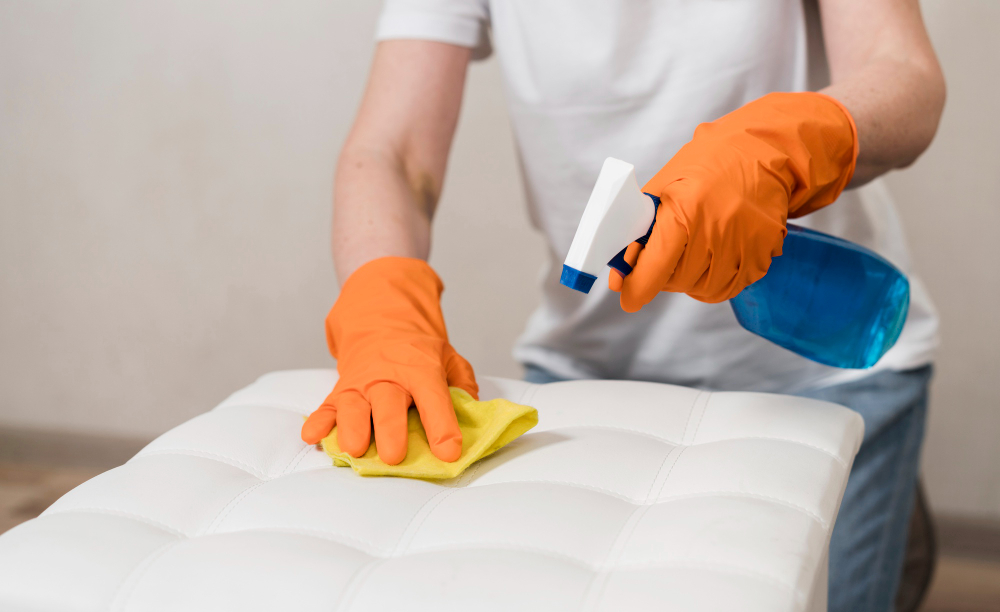
Your sofa and upholstery are among the most frequently used items in your home or office. They endure daily wear, spills, shifting weight, dust buildup, and constant exposure to airborne contaminants. Without proper care, even high-quality fabrics begin to show early signs of deterioration. Extending the lifespan of these surfaces requires more than occasional vacuuming. It calls for intentional maintenance, fabric-specific techniques, and periodic deep cleaning that targets hidden debris.
Upholstered furniture collects dust, oils, allergens, and fine particles from the air. Over time, these materials settle deep within fibers, weakening fabric integrity and dulling appearance. Regular maintenance supports both aesthetic appeal and long-term durability. Whether you manage a busy household or a high-traffic workspace, keeping the sofa and upholstery in optimal condition preserves comfort and protects your investment.
An expert-guided approach ensures that cleaning efforts are safe, effective, and tailored to each fabric type. With the right strategy, sofa and upholstery can remain vibrant, clean, and structurally strong for years.
Understanding What Damages Sofa and Upholstery Over Time
Several environmental and usage factors contribute to premature wear. Recognizing these patterns helps homeowners and businesses take steps to protect their furniture before damage becomes irreversible.
Common contributors to wear include:
- Dust and dirt particles that grind against fibers
- Body oils and sweat that gradually discolor fabric
- Sun exposure that fades colors and weakens materials
Dust acts like sandpaper, especially on delicate fabrics. Without routine removal, particles settle into fibers and accelerate thinning. Body oils from hands, arms, and hair also accumulate, leaving darkened areas or uneven texture. Sunlight causes fading on both natural and synthetic fabrics, especially when directly exposed for long periods.
In addition, seasonal conditions influence indoor air quality. During fall and winter, windows remain closed longer, allowing allergens and dust to settle more easily. Our guidance related to fall preparedness highlights how indoor environments evolve as seasons change and why furniture needs extra attention.
Understanding these damage patterns is the first step to long-term preservation.
Daily and Weekly Practices That Protect Upholstery
Routine care significantly extends the life of the sofa and upholstery by preventing particle buildup and reducing friction wear. These practices should be simple, consistent, and fabric-appropriate.
Effective maintenance includes:
- Vacuuming upholstery using a soft brush attachment to remove dust
- Rotating cushions to distribute weight and prevent sagging
- Keeping pets off furniture or using protective covers in high-traffic homes
Vacuuming prevents debris from embedding into the fabric. Cushion rotation ensures structural longevity by reducing strain on specific areas. Pet hair, dander, and claws can also contribute to fabric damage, making protective measures essential.
Spills should be addressed promptly, but care must be taken to use appropriate methods that do not set stains or damage fibers. Blotting rather than scrubbing is recommended, though deeper cleaning should always be deferred to professionals who understand fabric limitations.
These small habits support healthier, cleaner surfaces throughout the year.
Why Professional Deep Cleaning Extends Longevity
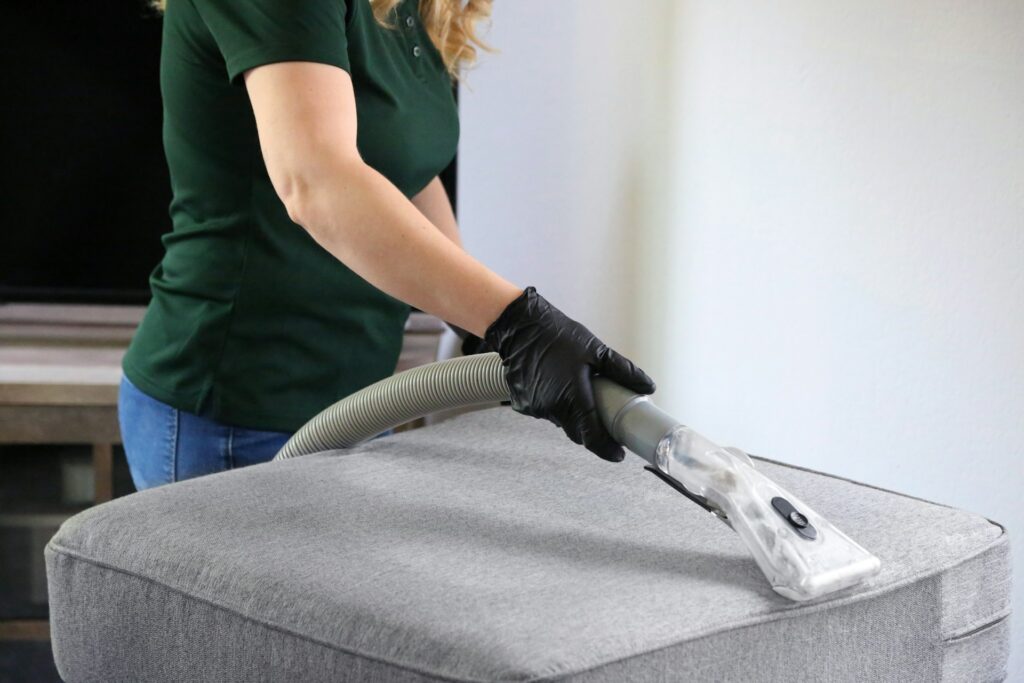
Over time, even well-maintained furniture accumulates oils, deep-set dirt, and allergens that vacuuming cannot reach. Professional deep cleaning revitalizes the sofa and upholstery by extracting contaminants from deep within the fibers and restoring the original texture.
Professional deep cleaning offers advantages such as:
- Improved fabric lifespan through the removal of embedded debris
- Enhanced indoor air quality by reducing allergens trapped in upholstery
- More vibrant color and texture after soil and oils are lifted
Upholstered furniture is a common collection point for allergens. Dust mites, pollen, and pet dander settle into soft materials, especially during allergy season. Guidance related to fall allergy cleaning explains how targeted deep cleaning can reduce allergy triggers inside the home.
Expert cleaners evaluate fabric types, colorfastness, and structural integrity before choosing cleaning methods. This ensures that delicate materials are treated safely. Attempting deep cleaning without proper knowledge can cause oversaturation, shrinkage, or permanent staining.
By incorporating periodic professional cleaning into your maintenance plan, your sofa and upholstery remain healthier and more durable year after year.
Preventing Long-Term Wear Through Smart Placement and Environment Control
Placement and environment management play a major role in extending the life of a sofa and upholstery. Even the highest quality cleaning regimen cannot prevent wear caused by poor placement or environmental stressors.
Factors to consider include:
- Keeping furniture away from direct sunlight to prevent fading
- Ensuring proper ventilation to reduce moisture buildup
- Using area rugs or protective mats beneath furniture in high-traffic zones
Sun exposure fades fabrics and increases brittleness. Adjusting curtains, blinds, or furniture positioning protects upholstery from long-term UV damage. Maintaining good ventilation prevents moisture-related odors and reduces microbial growth within fabric layers.
In offices or commercial spaces, the volume of daily use requires additional attention. Protective mats reduce abrasion from heavy foot traffic. Establishing designated eating or drinking areas prevents accidental spills on upholstered seating.
Environmental control helps maintain fabric strength and appearance, especially in conditions where furniture is used frequently.
When Sofa and Upholstery Need Expert Care
Even with consistent maintenance, sofas and upholstery eventually reach a point where professional care becomes essential. Deep staining, persistent odors, sagging cushions, or discoloration indicate that the furniture needs expert attention.
Professional assessment ensures:
- Safe treatment methods matched to fabric type
- Thorough extraction of contaminants beyond the surface level
- Restoration of comfort, cleanliness, and appearance
Experts identify underlying issues that may not be visible, such as hidden moisture, mold activity, or structural wear. They also apply protective treatments when appropriate, helping delay future staining and extend overall lifespan.
Attempting extensive cleaning or repair without proper expertise can worsen damage. Professional hands ensure that the sofa and upholstery are treated with the level of care required to maintain their long-term value.
When Your Furniture Deserves a Fresh Start
If your sofa or upholstered furniture needs deep cleaning or expert care, professional support helps restore comfort and extend lifespan. Contact Protek Cleaning for specialized cleaning solutions tailored to your home or office.